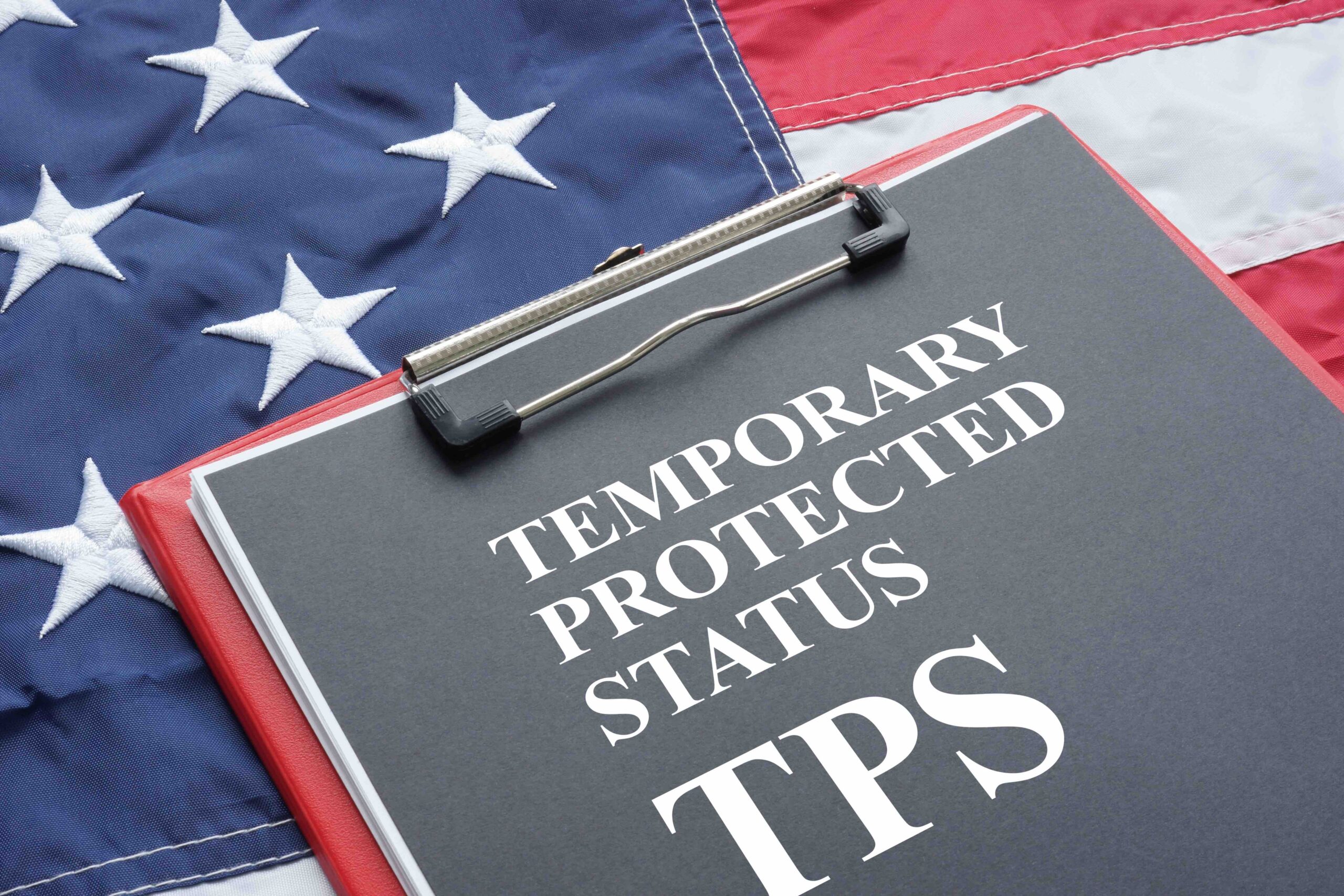
On June 25, 2026, the United States Supreme Court ruled 6-3 that the executive branch can terminate Temporary Protected Status (TPS) designation and other protections for foreign nationals from Haiti and Syria. In Mullin v. Doe, the majority concluded that the executive branch has broad powers when determining which countries qualify for the program, and under what circumstances it must be terminated.
“The Secretary’s [DHS Markwayne Mullin] TPS designation decisions are not subject to judicial review,” Justice Samuel Alito wrote for the majority. “There is no judicial review of any determination of the [Secretary of Homeland Security] with respect to the designation or termination or extension of a designation of a foreign state.”
Justice Elena Kagan, joined by Justices Sonia Sotomayor and Ketanji Brown Jackson, criticized the majority for giving the executive branch the power to strip vulnerable communities of legal protections without meeting basic administrative or procedural standards.
“The majority’s ruling flips traditional administrative accountability on its head, granting the executive branch total immunity from basic judicial oversight while putting hundreds of thousands of legally present individuals at immediate risk of removal,” Kagan wrote. “By insulating these sweeping policy shifts from meaningful review, the Court strips away vital protections against arbitrary and potentially biased government action.”
The Impact
While the decision has immediate and serious implications for the Haitian and Syrian communities, it also has an impact on people from any TPS-designated country currently living and working in the United States. The decision is a green light for the Trump administration to return to federal court in other cases and overturn other decisions ruling against the termination of TPS for people coming to the United States from other countries, including Burma, El Salvador, Ethiopia, Lebanon, Somalia, South Sudan, Sudan, Ukraine, Venezuela, and Yemen.
The ruling also has significant implications for employers, particularly those with foreign-born workers whose work authorization is based on a pending or approved TPS application. In some industry sectors, the ruling may create significant disruptions in the workforce.
Healthcare organization employers immediately raised the alarm, releasing a report warning that ending legal status for Haitian workers would “devastate the healthcare system.” Representative Mike Lawler (R-NY), in a post on X, said that while he supported the President’s authority to end TPS, he disagreed with the decision to end it for Haitians at this time. Lawler pointed to the large number of Haitians on TPS working in the healthcare system and said that revoking their status would create a healthcare crisis. “Of the 350,000+ lawful Haitian TPS holders, roughly one third work in our healthcare system. Immediately shutting off TPS will create a crisis in our hospitals, nursing homes, and in the I/DD (i.e. intellectually and/or developmentally disabled) community,” he said.
The Florida Restaurant & Lodging Association, joined with the National Restaurant Association and 11 other state hospitality associations, and issued a statement “to share impacts related to terminating the Temporary Protected Status (TPS) for nationals from Haiti and Syria who are currently living and working in the United States.”
The Supreme Court’s decision has significant implications for the more than 93,000 Temporary Protected Status (TPS) holders who have built their lives in Florida, as well as for the hospitality and tourism businesses and communities that rely on their contributions. Together, these individuals contribute an estimated $2.6 billion annually to Florida’s economy, underscoring the far-reaching impact this decision could have across our state…The practical deadline is immediate: work authorizations for Haitian and Syrian TPS holders are currently set to expire … in the middle of the summer season. Initial indications do not suggest the Administration is looking to postpone. For states with significant Haitian TPS populations, this could mean the abrupt loss of a meaningful share of the local hospitality workforce with almost no runway.
- Florida Restaurant & Lodging Association
Considerations for Employers in Reacting to the Ruling
After this Supreme Court ruling, employers will need to see updated instructions from United States Citizenship and Immigration Services (USCIS) before making any broad assumptions about work eligibility. In the meantime, employers with TPS employees are encouraged to reverify Form I-9 documentation for impacted employees and to evaluate each case individually. Some TPS employees may have another form of employment authorization or immigration status independent of TPS.
Employers should not remove a worker too early if USCIS still recognizes the related Form I-9 documentation as valid. However, it’s not advisable to continue employing someone after their work authorization has ended.
If you have any questions or concerns about how this Supreme Court ruling may affect your workforce and business— or to explore the possibility of alternative immigration relief pathways — don’t hesitate to contact Orr & Reno for assistance.